
Importance of Bowel Cancer Screening
Bowel cancer is more common than many people realise with nearly 300 Australians diagnosed every week. What makes this disease especially dangerous is how quietly it can develop. Often referred to as the “silent thief,” it can lay dormant in the bowel for years without any noticeable symptoms, meaning it’s very possible to have bowel cancer without knowing it.
Most bowel cancers begin in the lining of the colon or rectum and gradually grow over time. If left undetected, they can spread to other parts of the body such as the liver or lungs, making treatment more complex.
While bowel cancer has traditionally been more common in people aged 50 and over, there has been a noticeable rise in diagnoses among younger adults in recent years. That’s why screening is so important as it helps detect changes early before you even realise anything is wrong.
The good news? When bowel cancer is found early, it’s often highly treatable. In many cases, early detection can mean simpler treatment, better outcomes, and a much higher chance of recovery.

Your Bowel Cancer Screening Options
In Australia, screening can start at home. If you’re aged 50–74, you’ll automatically receive a free at-home bowel screening kit every two years through the National Bowel Cancer Screening Program, and if you’re aged 45–49, you can opt into the program early. It’s simple, private, and an important first step in checking for early warning signs.
But while the at-home test is valuable, the most effective way to detect (and even prevent) bowel cancer is a colonoscopy.
What is a colonoscopy?
A colonoscopy is a simple procedure where a specialist uses a thin, flexible camera to look inside your bowel and check for anything unusual, like polyps or early signs of cancer.
Why it’s important
Also known as lower gastrointestinal endoscopy, colonoscopy is the most accurate way to detect bowel cancer early, and it can even help prevent it. During the procedure, doctors can remove precancerous polyps, take tissue samples, and treat minor issues on the spot, all in one visit. It’s one of the most effective procedures we have to protect bowel health and improve long-term patient outcomes.
When to Talk to Your GP About a Colonoscopy
You shouldn’t wait for something to feel seriously wrong. A colonoscopy is recommended if:
- Your at-home screening test returns a positive result
- You’re experiencing ongoing symptoms that require further investigation like abdominal pain, bloating, unexplained weight loss, changes in bowel habits, or rectal bleeding
- You have a family history of bowel cancer or certain digestive conditions, including diverticulosis, diverticulitis, Irritable Bowel Syndrome, Inflammatory Bowel Disease or other digestive and kidney diseases
The key is listening to your body, acting early and being an advocate for your own health. If something doesn’t feel right, or even if you just want peace of mind, speak to your GP about whether a colonoscopy is right for you.
Rapid Access Endoscopy. Fast Track your Colonoscopy.
Booking in for a colonoscopy to investigate your digestive concerns doesn’t have to be a complex or drawn-out process. If you have a referral from your GP and meet the eligibility criteria, you can book in directly for your procedure through our doctors’ Rapid Access Endoscopy Service which skips the usual specialist consultation, saving you valuable time.
This service is especially important for people at higher risk, including those with a positive at-home screening result, rectal bleeding, ongoing digestive symptoms, or a family history of bowel cancer. You’ll receive your results generally on the day of your procedure or shortly after, with a report sent directly to your GP along with clear next steps and follow-up support. It’s all about acting early, reducing uncertainty, and giving you clarity when you need it most.
Why Choose Westside Private Hospital for Rapid Access Endoscopy?
- Advanced endoscopy technology from industry-leading providers
- World-class patient satisfaction results in 2025 and 2026, as shown in our Net Promoter Score
- State-of-the-art facility that prioritises your comfort and well-being
- Emphasis on each patient’s experience and safety
- Highest standards in clinical & nursing care
- Efficient day surgery setting, so you can return to the comfort of your own home sooner
- Convenient location in Taringa, Brisbane
Meet our Gastroenterologists & General Surgeons who offer Rapid Access Endoscopy & Colonoscopy
All of our specialists at Westside Private Hospital are registered with the Australian Health Practitioner Regulation Agency (AHPRA). Our gastroenterologists are Fellows of the Royal Australasian College of Physicians (FRACP), while our general surgeons are Fellows of the Royal Australasian College of Surgeons (FRACS) with additional specialised training in endoscopy.











Rapid Access Endoscopy Benefits

Early detection of Cancer and disease
Endoscopy is critical for detecting bowel cancer, stomach cancer, and precancerous polyps at an early stage, which is vital in Australia because bowel cancer is one of the most common cancers and survival rates are much higher when detected early.
Disease prevention
Colonoscopy (ie. lower endoscopy) enables doctors to remove precancerous polyps during the procedure, which prevents cancer from developing altogether. This is especially important as bowel cancer often develops slowly over many years and detecting and removing polyps early interrupts that progression.
Fast & Minimally Invasive
Endoscopy is a minimally invasive procedure, performed in a single day with a short recovery time, and a low complication rate. Patients take comfort in knowing they can return home the same day and resume normal activities quickly.
Accurate & comprehensive diagnosis
Endoscopy allows your doctor to see your gastrointestinal tract so they can provide a highly accurate diagnosis. Your doctor can detect inflammation, ulcers, tumours and bleeding, and immediately take biopsies for further testing.
Supports Australia’s National Bowel Cancer Screening Program
Endoscopy underpins Australia’s bowel cancer screening program. People with positive test results can book their endoscopy to have their symptoms investigated, plus endoscopy is used for ongoing surveillance of high risk patients.
Safe with low complication rates
Endoscopy is considered very safe with complications being rare and occurring in only a small percentage of cases.
It can also diagnose and treat conditions in the same procedure.
Risks & Side Effects
Endoscopy is generally very safe, and serious complications are rare. However, it’s still important to understand the potential risks even though they’re uncommon. These can include:
- Mild sore throat or temporary discomfort (gastroscopy)
- For colonoscopy patients, some mild bloating or cramping is normal due to the air introduced during the procedure, but these symptoms usually pass quickly
- Minor bleeding (especially after a biopsy or polyp removal)
- Infection, which we minimise with our stringent infection control and sterilisation standards
- Or in very rare cases, perforation of the bowel or a reaction to the anaesthesia.
Rest assured, these risks are carefully managed through expert care and close monitoring by our experienced team.
What to Expect From Your Endoscopy Procedure
Our hospital and your doctor’s rooms will provide you with clear, easy-to-follow instructions for your endoscopy procedure making the preparation simple and stress-free. Below, you’ll find more information on what to expect, based on the type of endoscopy you’re having.
Colonoscopy Preparation:
Effective bowel preparation is essential for a successful colonoscopy. Before your procedure, you will complete a health assessment form and be provided with education on the special diet and bowel preparation fluid you are required to take to thoroughly cleanse your colon. It’s important to follow these instructions carefully to ensure your doctor has the clearest possible view during the colonoscopy.
Gastroscopy Preparation:
You will be asked to fast before your gastroscopy as your stomach needs to be empty which means no food or drinks for a set period beforehand. You’ll also receive clear advice about any regular medications, with instructions tailored to your individual health needs based on your doctor’s recommendations.
During the Procedure
On arrival, our friendly team will greet you and guide you through each step of the process so you feel at ease. Twilight anaesthesia will be administered so you are comfortable and sedated in a dream-like state of relaxation throughout the procedure. The endoscope is then gently inserted through the appropriate natural opening, allowing your doctor to perform a thorough examination, taking biopsies, or carrying out minor therapeutic treatments if required.
After the Procedure
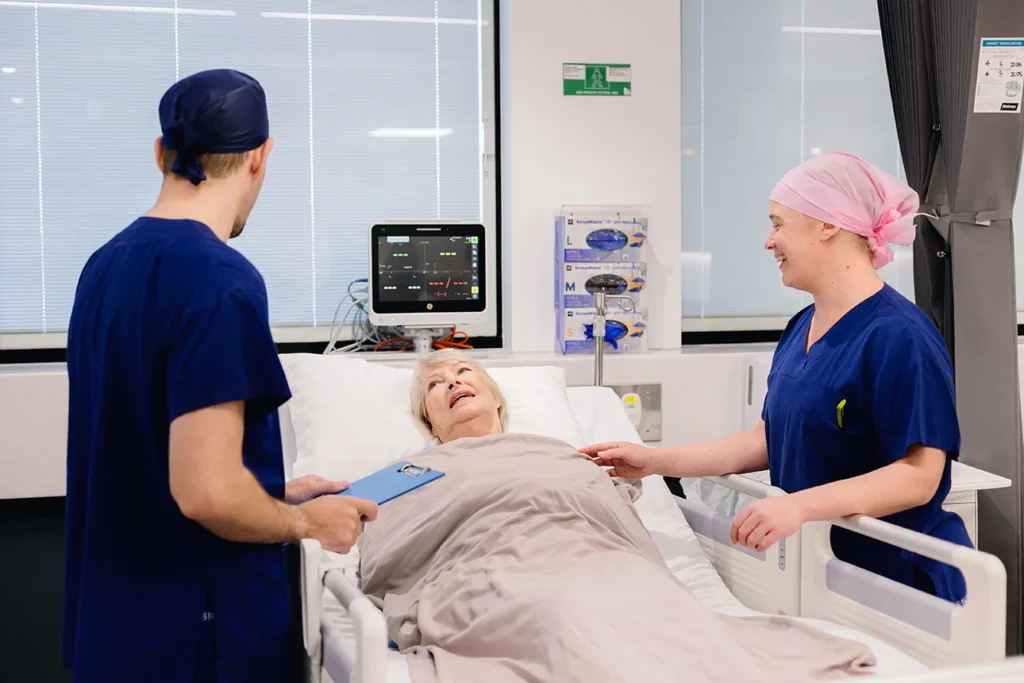
After the procedure, you will wake and rest in a comfortable recovery area under supervision until the effects of the sedation wear off. Most patients experience minimal discomfort and are able to go home shortly afterwards.
As the sedative may temporarily affect your reflexes and judgement, you will need someone to drive you home from the hospital and remain with you overnight.

Costs and Private Health Insurance
Privately Insured Patients
If you hold appropriate private health insurance, you will generally only need to pay the excess or co-payment on your policy. Our hospital will confirm this with you at the time of booking. The anaesthetist and your treating doctor will each provide details of their fees separately.
If you require an initial specialist consultation, a Medicare rebate will also be available.
Uninsured (Self-Funded) Patients
If you do not have private health insurance, you can still have your endoscopy at our hospital as an uninsured (self-funded) patient. You will be provided with a competitive quote on request. Your treating doctor and anaesthetist will also provide you with their costs and fees if you are self-funding your procedure. Their costs and fees are separate to the hospital fee.
Our goal is to make high-quality private healthcare more transparent and within reach for our local community, and we believe our hospital fees for self-funded patients to be highly competitive.
Colonoscopy & Rapid Access Endoscopy Appointments & Enquiries
Obtain a Referral from your GP
To book an appointment with one of our gastroenterologists or general surgeons you will need a referral from your GP.
Consultations & Rapid Access Procedures
Please click on your preferred doctor’s profile above and contact their private practice rooms directly to make a booking.
Frequently Asked Endoscopy/Colonoscopy Questions
What is an endoscopy?
A procedure that uses a thin, flexible camera to examine the digestive tract. Endoscopy includes investigation of the upper gastrointestinal tract (gastroscopy) and the lower gastrointestinal tract (colonoscopy).
What is Rapid Access Endoscopy?
A faster way to get your procedure done. If you’re eligible, under Rapid Access you can book your endoscopy generally within 7–14 days, without needing an initial specialist consultation.
Why do I need an endoscopy?
To investigate symptoms (e.g. pain, bleeding, reflux), follow up abnormal screening results, if you fall into a high risk category, or to monitor existing conditions.
Who performs endoscopy?
At Westside Private Hospital, your care is led by highly trained and experienced specialists. Our Rapid Access Endoscopists are gastroenterologists or general surgeons who are fully credentialed to deliver endoscopy safely and to the highest standard.
How do I prepare for an endoscopy?
Colonoscopy: You will be provided with bowel prep instructions to clear your bowels before the procedure.
Gastroscopy: Requires fasting for several hours beforehand.
Is the procedure painful?
Patients feel no pain as we use sedation to perform endoscopy and you will be closely monitored by an anaesthetist.
How long does it take?
The procedure can take anywhere from 15 - 45 minutes. You can expect to be at the hospital for a few hours as additional time is spent in recovery.
Is endoscopy safe?
Yes endoscopy (including gastroscopy and colonoscopy) is considered very safe. For most patients, it’s a routine day procedure. Like any procedure though side effects can be experienced and its important to be aware of these.
Mild & temporary side effects you may experience:
- Drowsiness caused by the sedation, though this should pass quickly.
- Mild abdominal discomfort
- Sore throat (gastroscopy), which usually settles within 24 hours
- Mild cramping (colonoscopy) if polyps are removed which are typically short-lived
Less common side effects:
- Bleeding if polyps are removed or a biopsy is taken. This is usually minor and stops on its own, but can sometimes require treatment
- Reaction to sedation. This is rare but can include breathing or heart changes, and is why you are closely monitored by our hospital team throughout your procedure.
Serious and rare side effects:
- Perforation (tear in the bowel or stomach wall). This occurs in a very small number of cases and may require surgery to repair.
- Significant bleeding, which can require further treatment or observation
- Infection, which is extremely rare and mitigated by stringent infection prevention and safety standards at our hospital
What can an endoscopy detect?
It can identify conditions such as polyps, bowel cancer, inflammation, ulcers, and sources of bleeding.
How much does it cost?
Costs may vary:
Privately insured patients - Medicare rebates apply for consultations. Procedure costs are typically made up of three separate components: the hospital fee, your doctor’s fee, and the anaesthetist’s fee.
If you hold appropriate private health insurance, you will generally only need to pay the applicable excess or co-payment on your policy. The anaesthetist and your treating doctor will each provide details of their fees separately.
Uninsured (self-funded) patients – our hospital can provide a competitive all-inclusive quote on request to undergo your procedure privately instead of waiting through the public system. Please contact our helpful team for more information:
E: enquiries@westsideprivate.com.au
P: 07 3833 6781
When can I return to normal activities?
Most patients resume normal activities the next day so the downtime is minimal.